
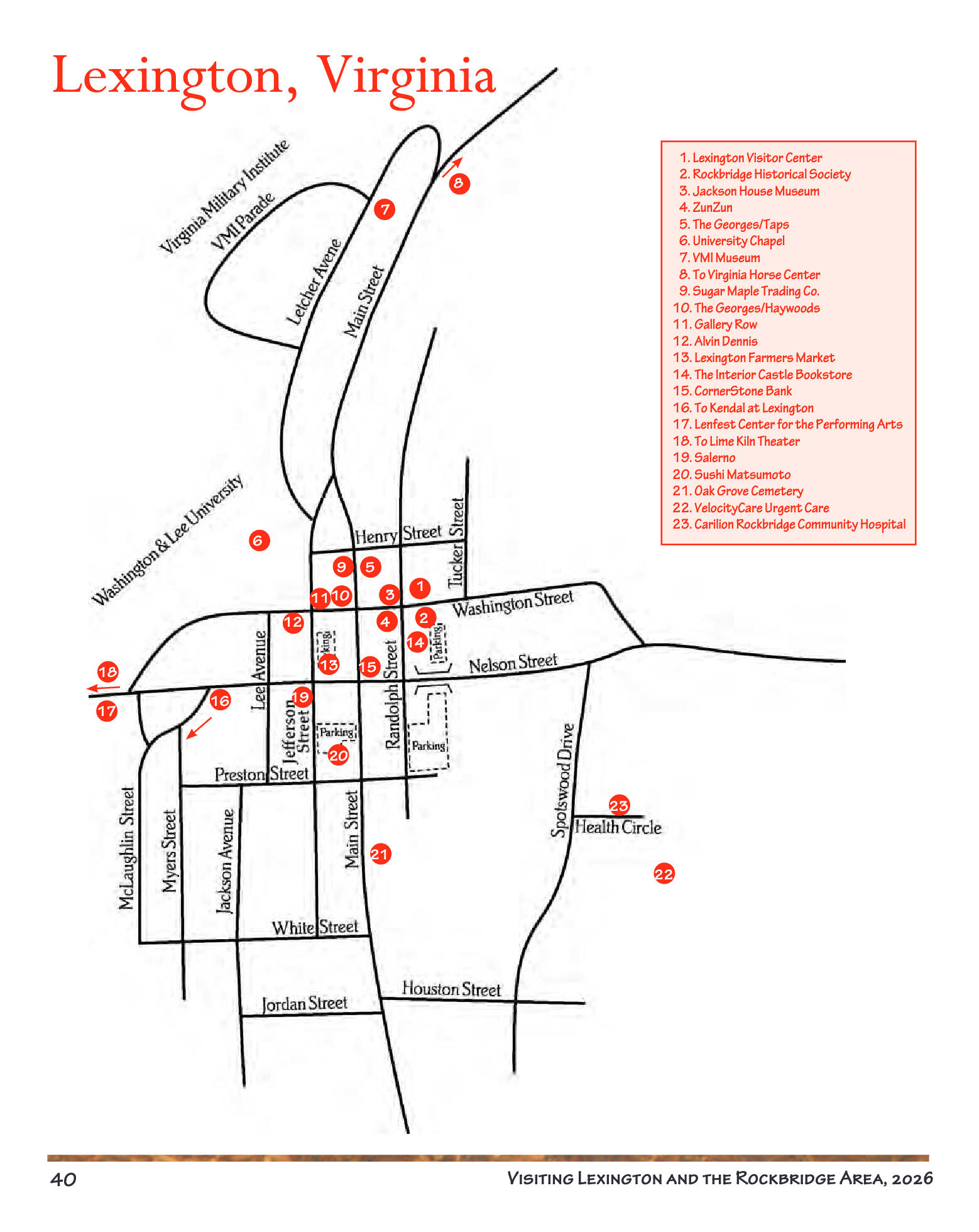
The Jackson House at 8 East Washington Street in Lexington, just one block west of the Lexington Visitor Center, explores the pre-Civil War home life of Thomas J. Jackson, the Lexingtonian who became internationally famous as Confederate General “Stonewall” Jackson. The 225-year-old home tells the story of newlyweds Thomas and Mary Anna Jackson and six enslaved people on the eve of the Civil War. Explore the exhibit galley with artifacts that illuminate Jackson’s life as a private citizen, professor at the Virginia Military Institute, family man, church member, and community leader during his decade in Lexington.
An exciting new self-guided, video-based tour allows visitors to explore the house and gardens at their own pace, while interpreters are ready to engage in deeper discussions about life in Lexington during the 1850s.
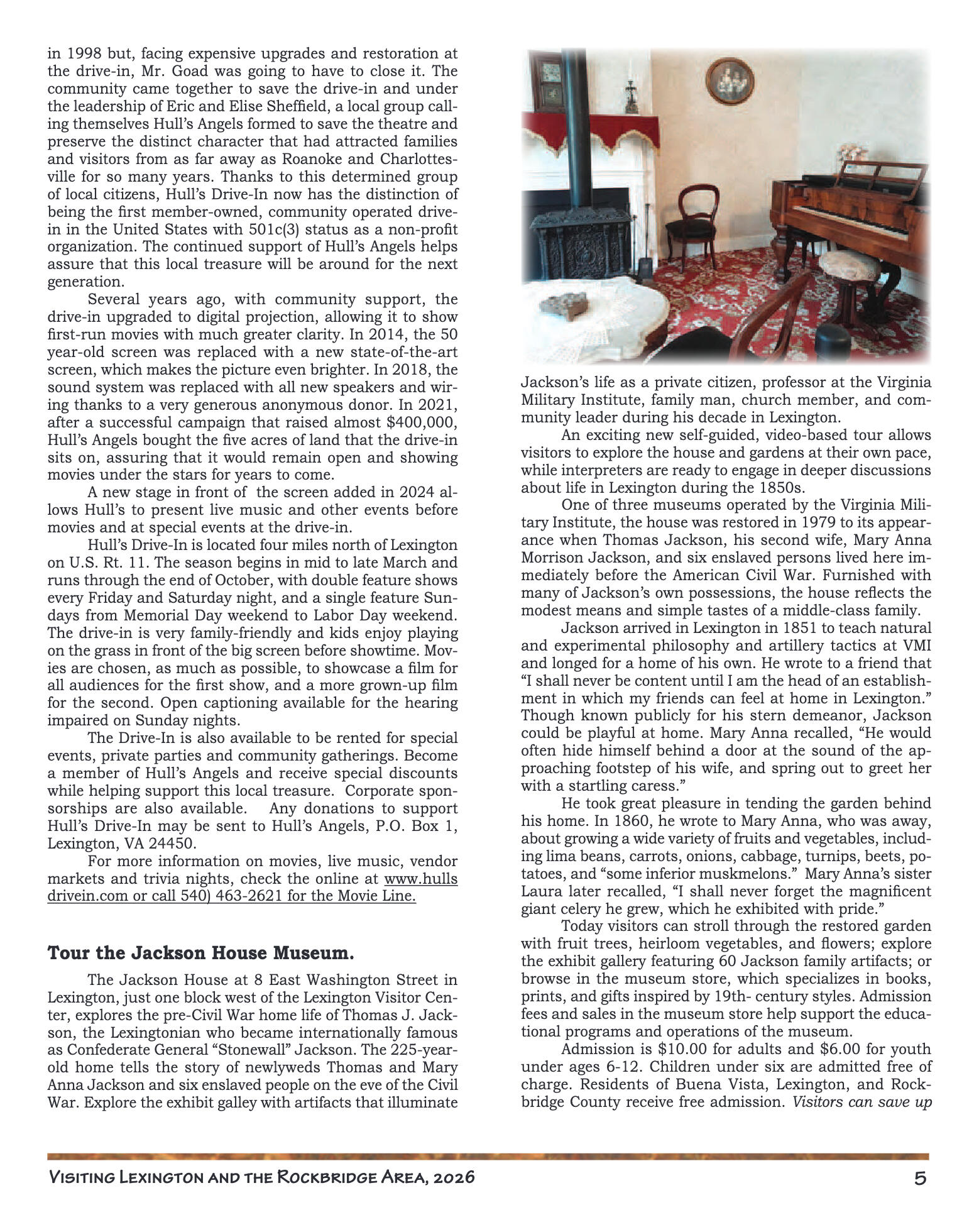
One of three museums operated by the Virginia Military Institute, the house was restored in 1979 to its appearance when Thomas Jackson, his second wife, Mary Anna Morrison Jackson, and six enslaved persons lived here immediately before the American Civil War. Furnished with many of Jackson's own possessions, the house reflects the modest means and simple tastes of a middle-class family.
Jackson arrived in Lexington in 1851 to teach natural and experimental philosophy and artillery tactics at VMI and longed for a home of his own. He wrote to a friend that "I shall never be content until I am the head of an establishment in which my friends can feel at home in Lexington." Though known publicly for his stern demeanor, Jackson could be playful at home. Mary Anna recalled, "He would often hide himself behind a door at the sound of the approaching footstep of his wife, and spring out to greet her with a startling caress."
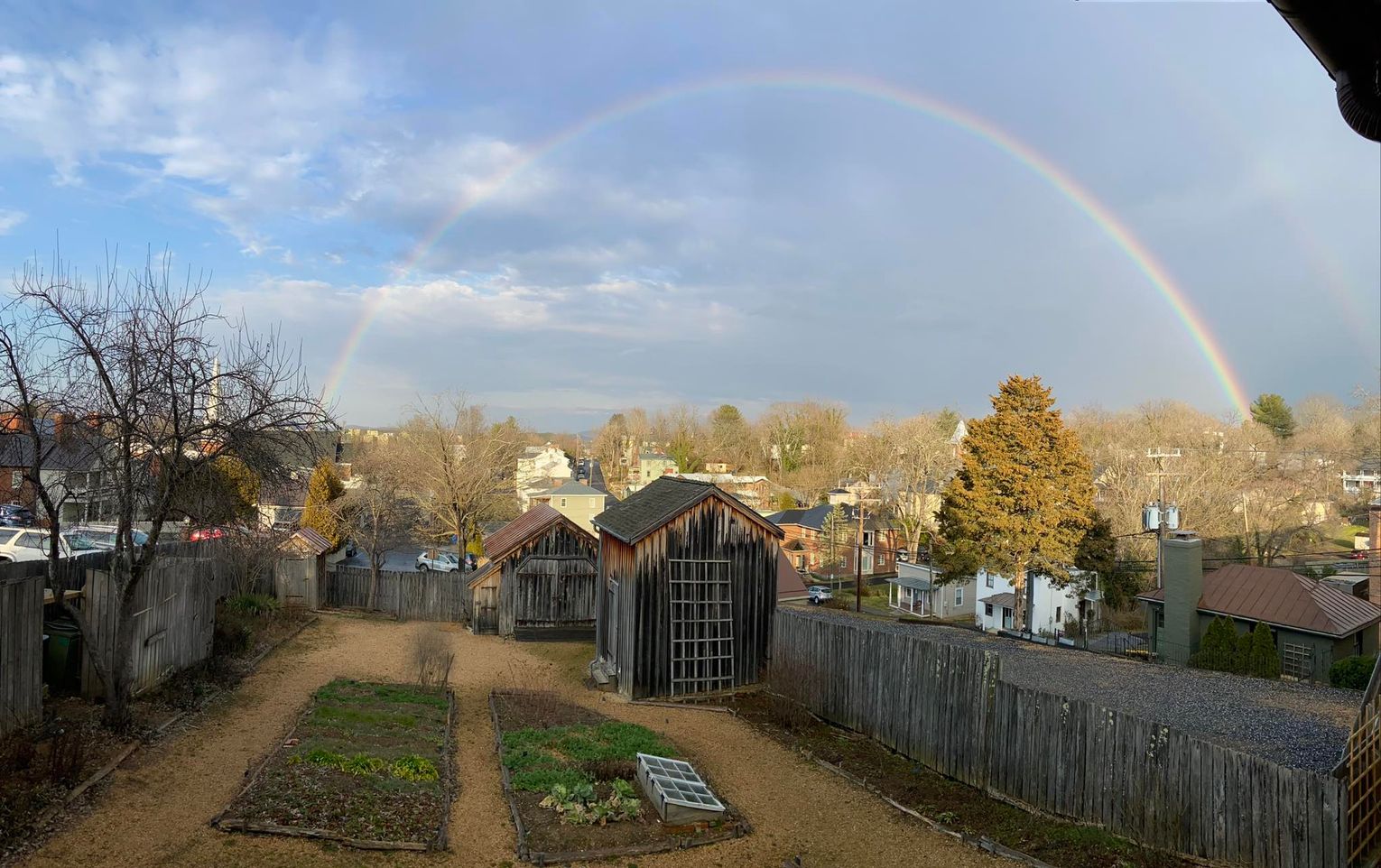
He took great pleasure in tending the garden behind his home. In 1860, he wrote to Mary Anna, who was away, about growing a wide variety of fruits and vegetables, including lima beans, carrots, onions, cabbage, turnips, beets, potatoes, and "some inferior muskmelons." Mary Anna's sister Laura later recalled, "I shall never forget the magnificent giant celery he grew, which he exhibited with pride."
Today visitors can stroll through the restored garden with fruit trees, heirloom vegetables, and flowers; explore the exhibit gallery featuring 60 Jackson family artifacts; or browse in the museum store, which specializes in books, prints, and gifts inspired by 19th- century styles. Admission fees and sales in the museum store help support the educational programs and operations of the museum.
Admission is $10.00 for adults and $6.00 for youth under ages 6-12. Children under six are admitted free of charge. Residents of Buena Vista, Lexington, and Rockbridge County receive free admission. Visitors can save up to 30% with a bundle ticket that includes admission to the Jackson House Museum, the VMI Museum, and the Virginia Museum of the Civil War. Group rates are available with advance reservations.
For more information, go to: www.vmi.edu/jhm.









Comment
Comments